The layer you never see
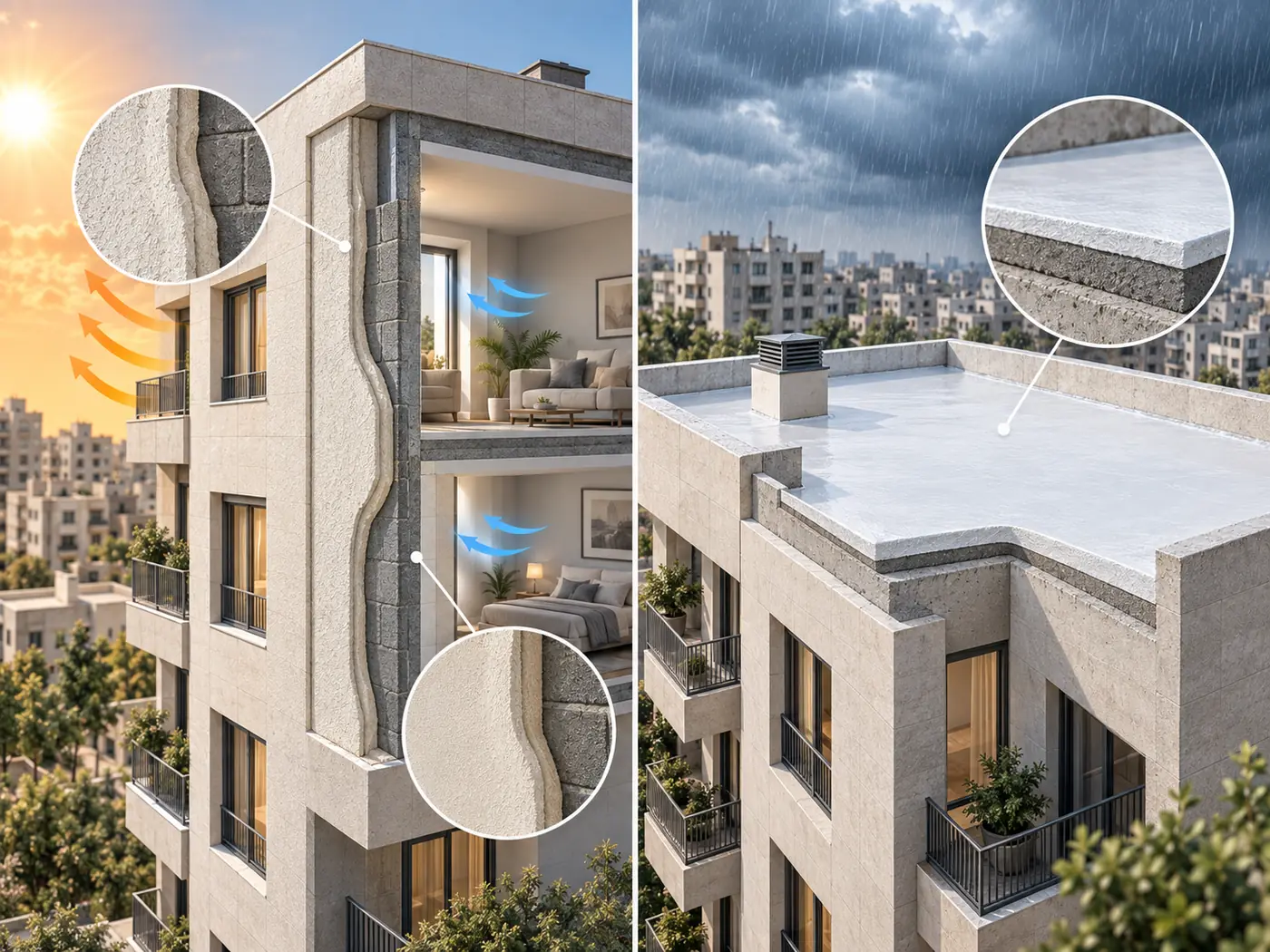
Cladding is judged on sight; insulation is judged only years later — at the first winter, or the first heating bill. Because its quality does not show immediately, it is the item most often cut back at the owner’s expense.
Our position on this is simple: we deal in numbers, not adjectives. When we say a material insulates, we have the figure for its thermal conductivity, its density and its fire classification — and you can verify them yourself.
A complete system
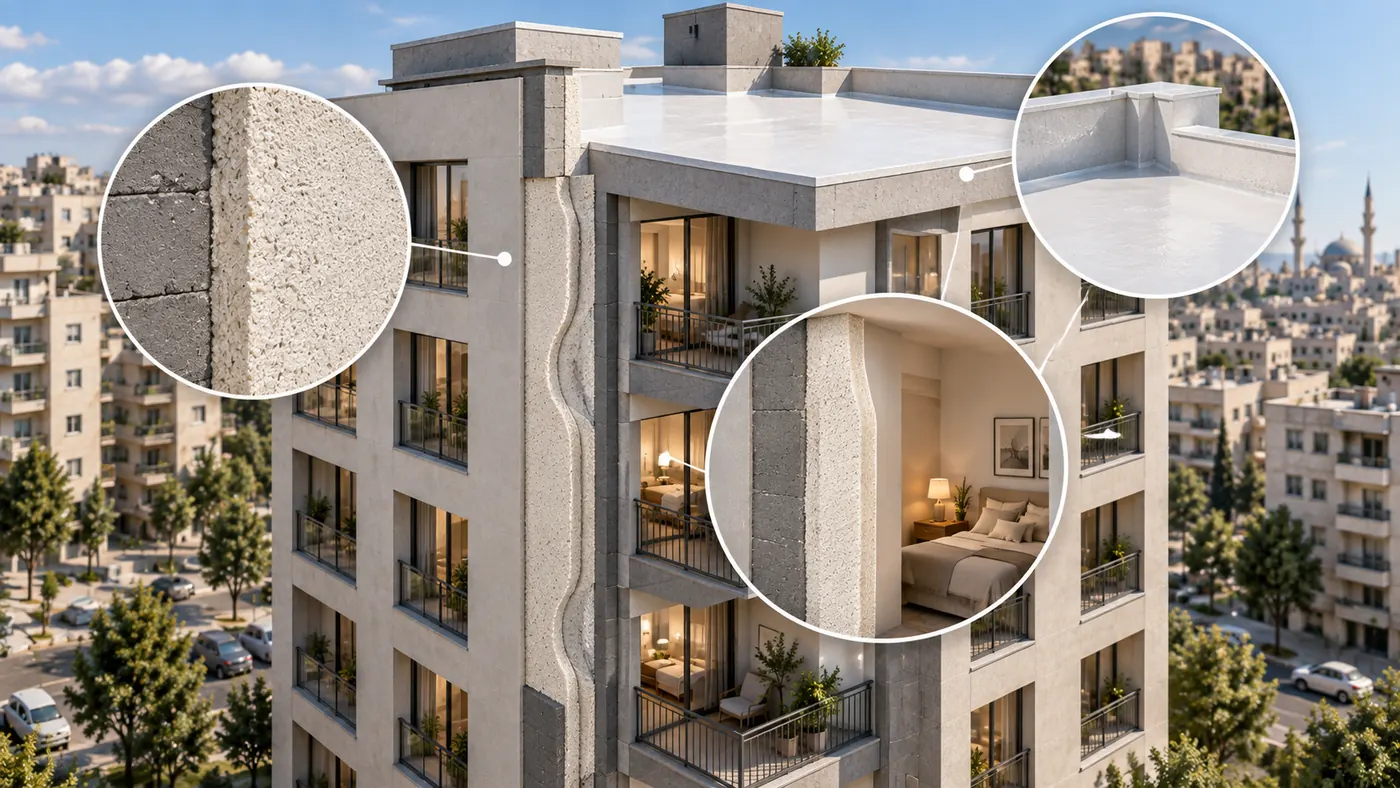
- Thermal insulation — for facades and roofs, to cut energy use in summer and winter
- Waterproofing — for roofs, bathrooms and basements, in layers tested before they are covered
- Acoustic insulation — between floors and between residential units
- Fire protection — for walls and steel sections
- Lightweight floor screeds — insulating and light in weight
Why natural volcanic materials?
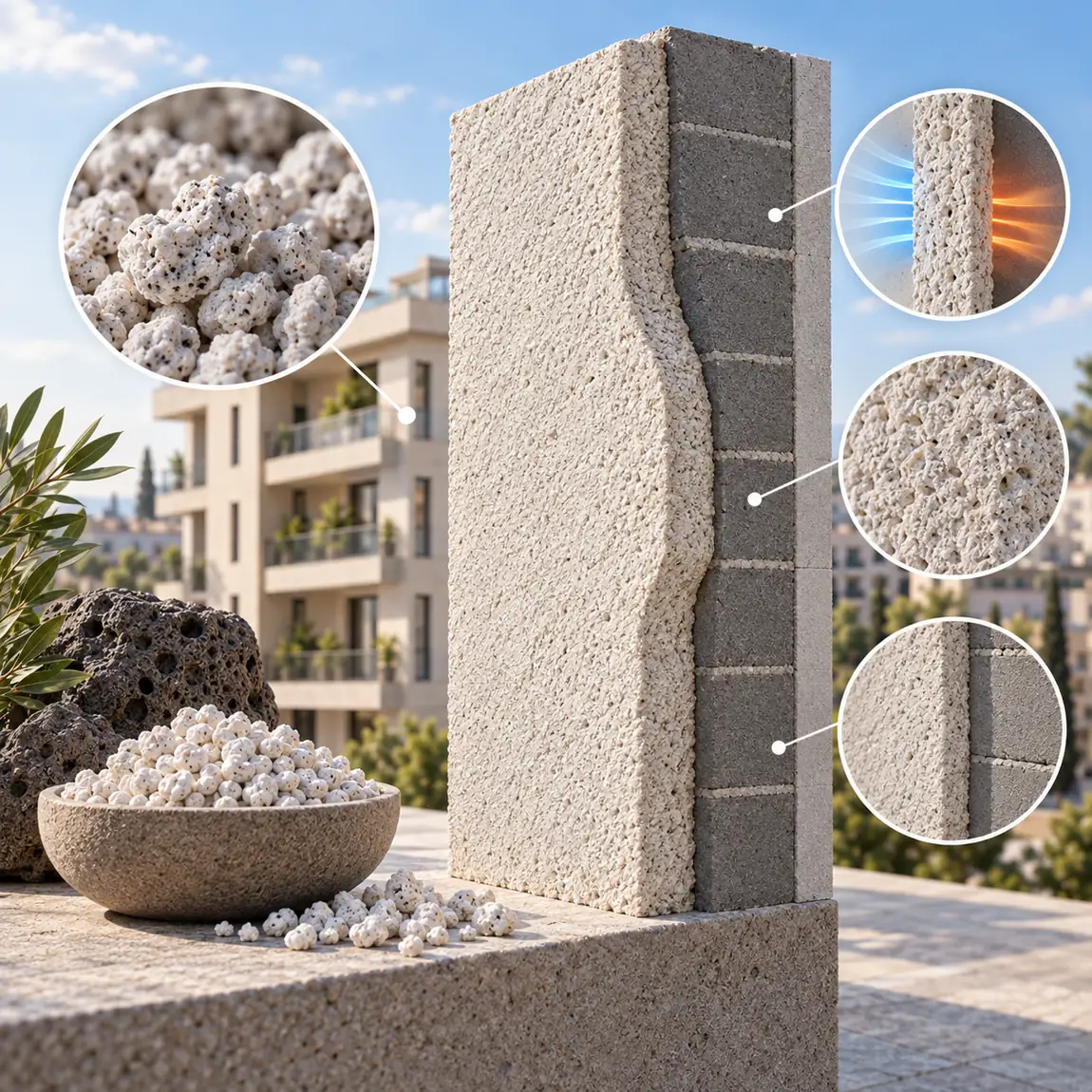
Our systems are built on natural volcanic materials whose granules expand under heat to form a cellular structure filled with fine air bubbles. Those trapped bubbles are the source of the insulating performance.
| Property | Typical value |
|---|---|
| Thermal conductivity | ~0.044 W/m·K |
| Bulk density | 40 – 140 kg/m³ |
| Fire classification | Class A1 (DIN 4102) |
| Melting point | ~1300 °C |
| Behaviour with moisture | Hydrophobic — does not rot or change volume |
| pH value | ~6.5 – 7.5 (neutral) |
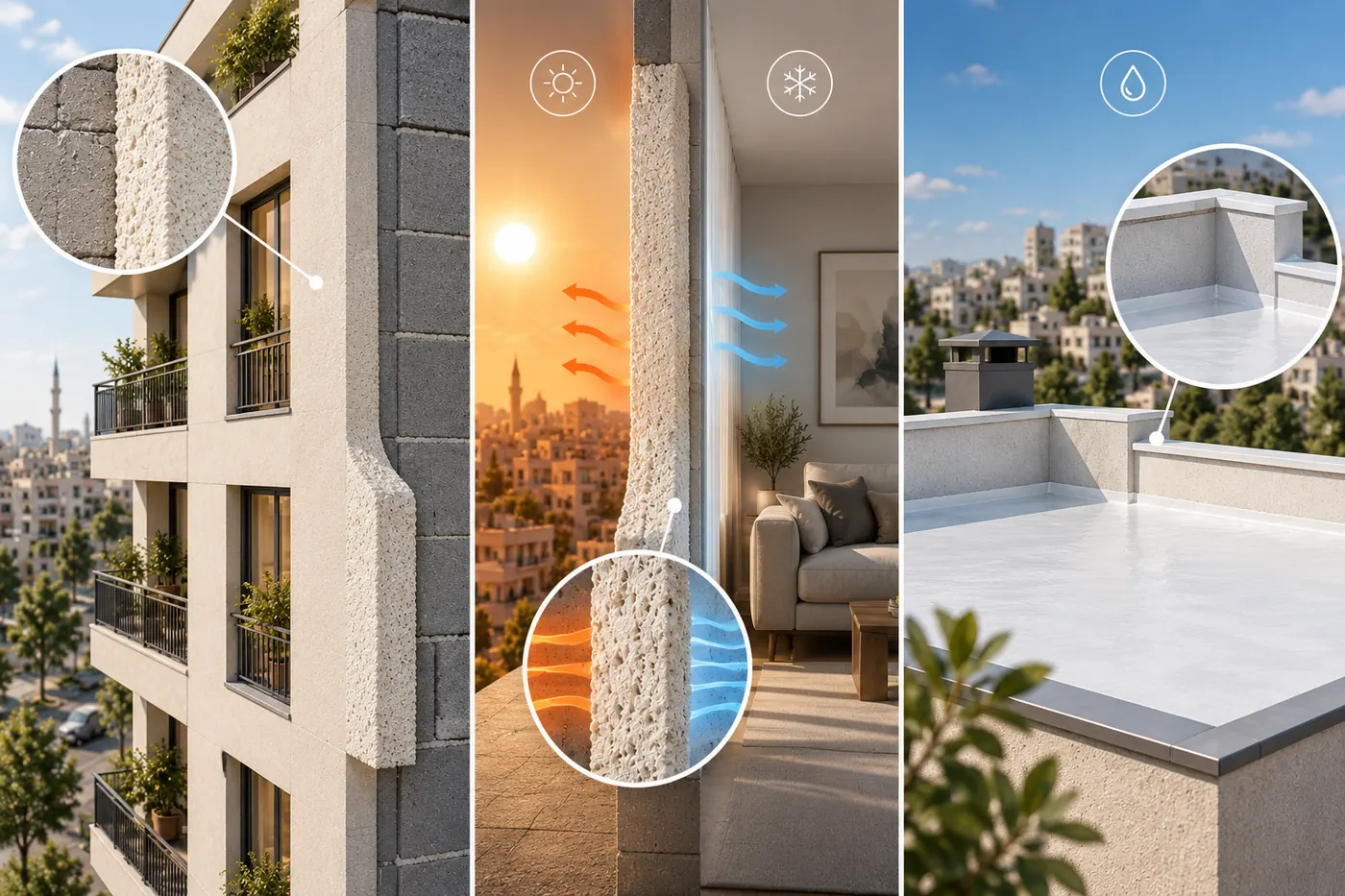
Three points worth noting
Class A1 is the highest fire-resistance category — the material is non-combustible outright, not merely slow to ignite.
Light weight reduces the dead load on the structural frame, an important consideration in restoration and rehabilitation.
Stable performance — unlike some plastic insulants whose thermal resistance degrades over time, volcanic materials hold their properties for the life of the building without maintenance.
The values given are typical ranges and may vary with the product, its density and the conditions of application; detailed design relies on the specification sheet supplied with each consignment.
How we ensure quality here
Diagnosing the need
Determining the type of insulation each surface requires, by its exposure and its function.
Selecting the system
Choosing the material and thickness on the basis of documented technical specifications.
Preparing the surfaces
Treating cracks and joints and laying the necessary primer coats.
Testing before covering
Flood-testing the waterproofing to confirm its integrity before cladding.
Projects in this service


Have a project in the pipeline?
Send us the drawings or approximate area and the scope of work, and you will receive a detailed quotation with clear items and quantities.