What makes the difference in cladding?
The materials are available to everyone; the difference is made by what precedes installation and what accompanies it. The same stone looks cheap on an uneven wall and expensive on one set true to level. That is why our work begins before the material reaches the site.
Scope of works
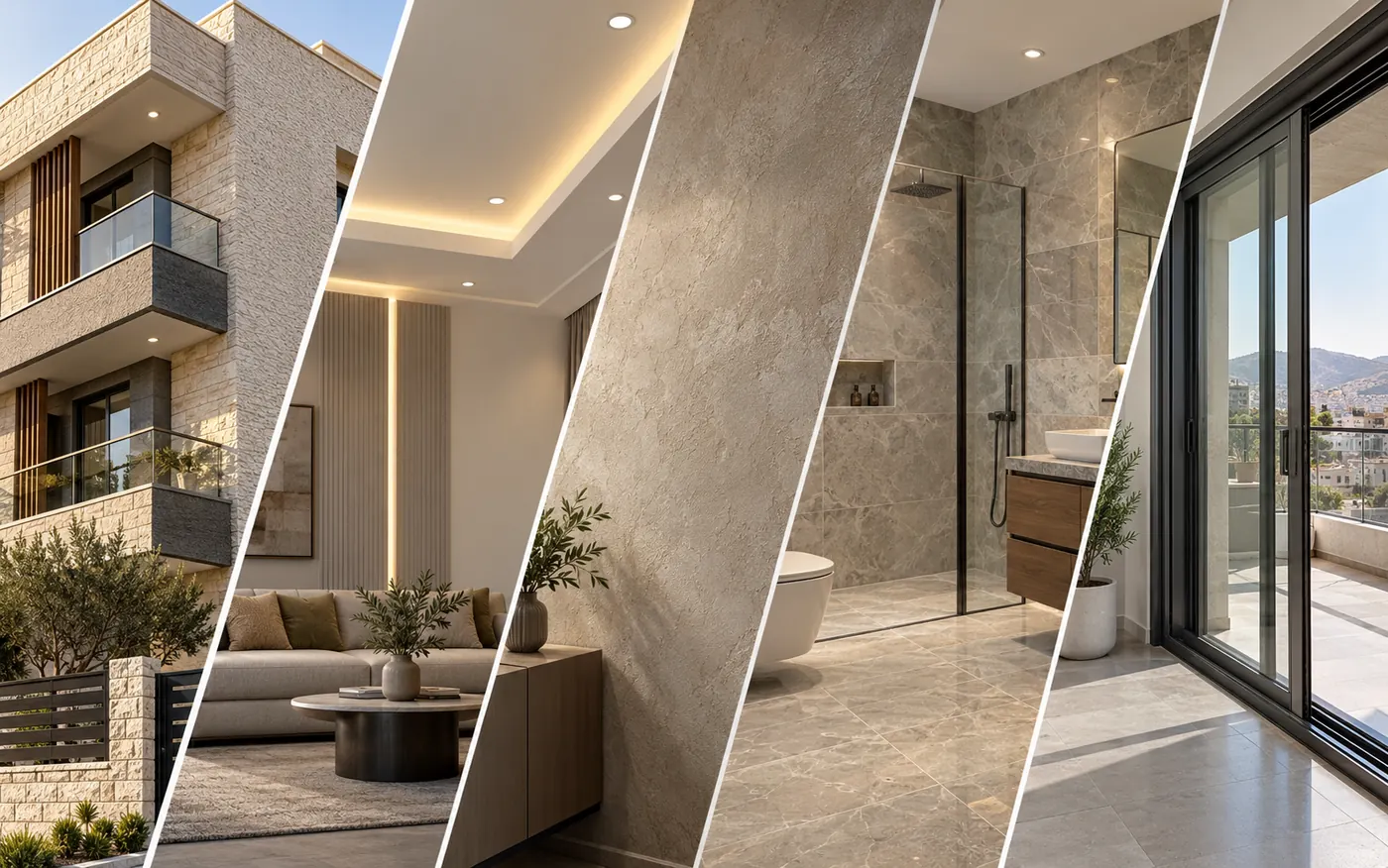
- External facades — natural and engineered stone, aluminium composite, and structural glazing systems
- Gypsum and decoration — suspended ceilings, lighting coves and wall features
- Paint — interior and exterior, in decorative and insulating finishes
- Tiling — porcelain, ceramic and marble for floors and walls
- Aluminium and glass — doors, windows and partitions
Four disciplines we hold to
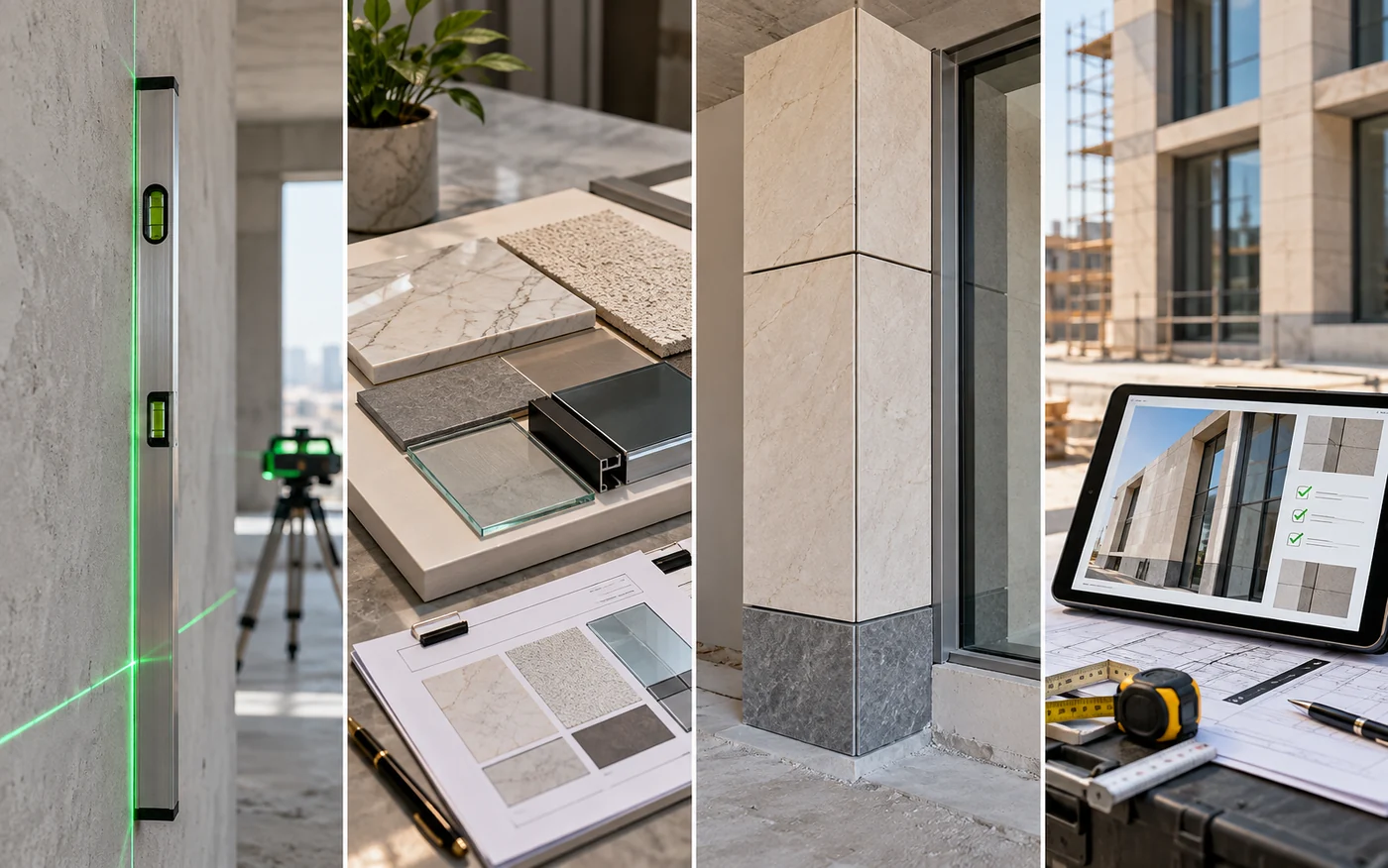
Surveying the surfaces before we start. We check walls and floors for level and correct any deviation before the first piece goes up. Correcting it afterwards costs several times what it costs beforehand.
An approved sample, signed by you. Every material and texture is approved as a sample before full delivery. A colour on a screen is not the colour on your site under sunlight.
A reference mock-up. We complete a limited portion of each item and present it for approval, then apply it across the remaining works. If there is a reservation, it is easier to meet on one square metre than on a hundred.
Documented acceptance for every item. A technical record before moving on to the next, so that observations do not accumulate until the end of the project.
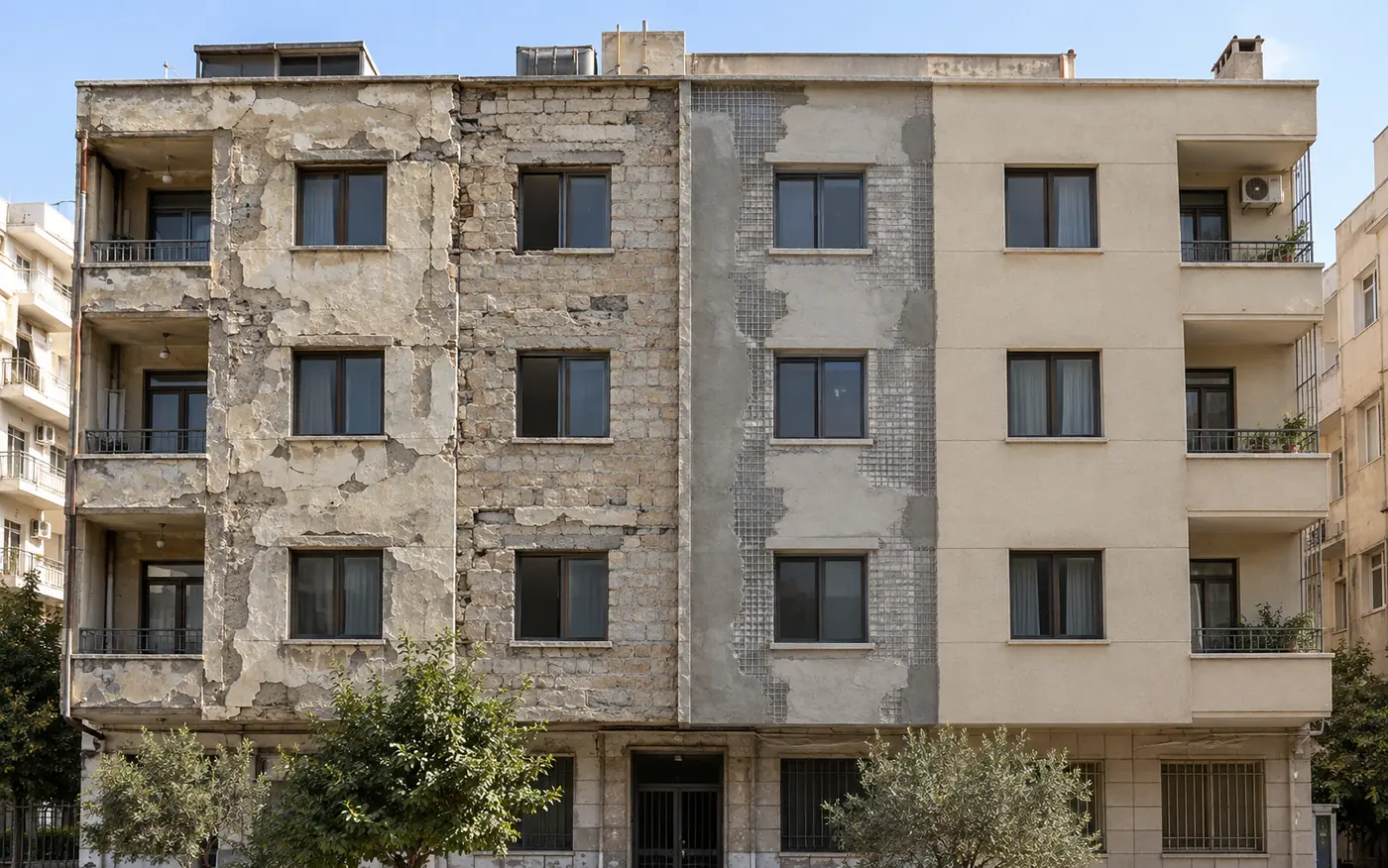
Restoration and strengthening
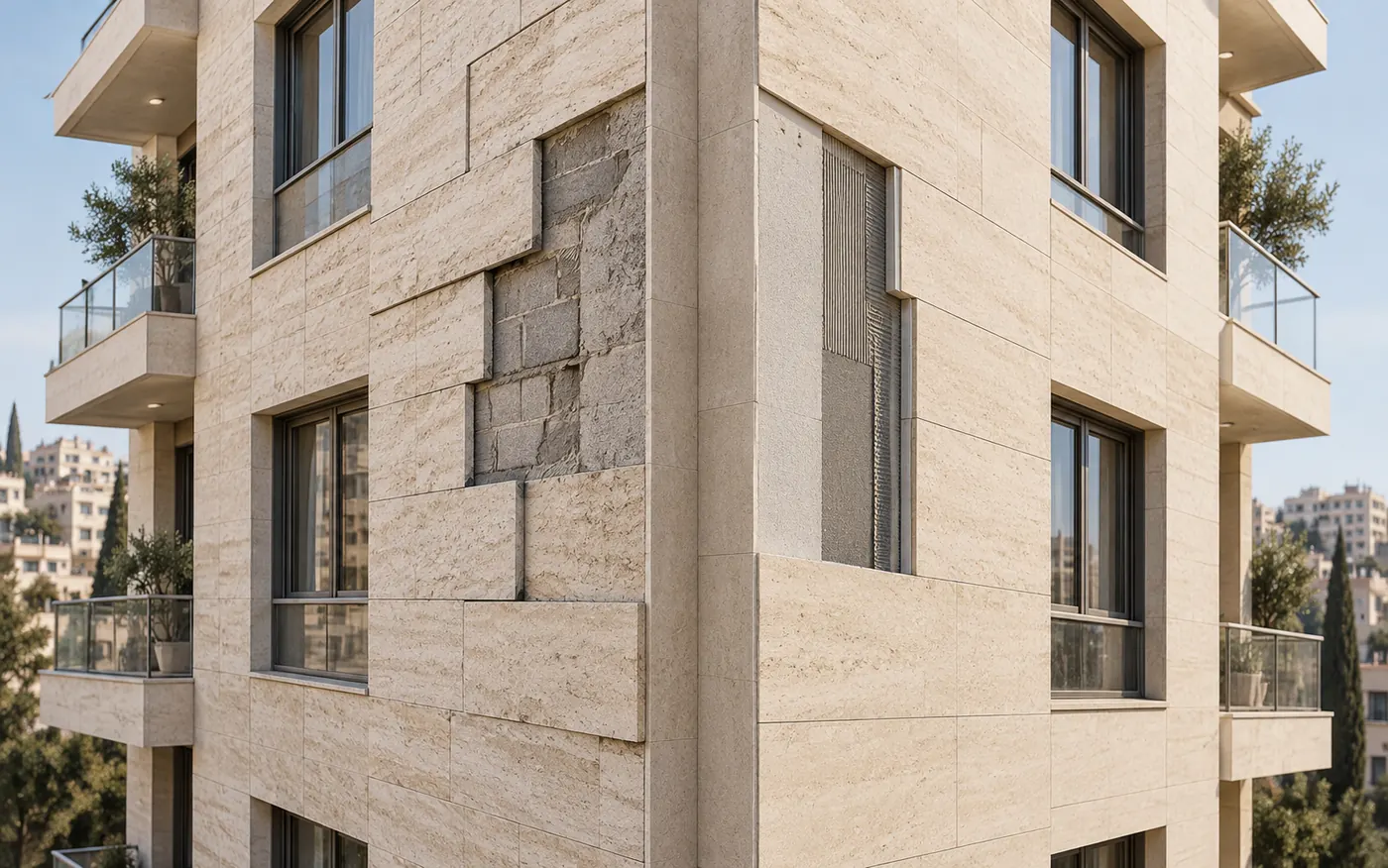
We receive many requests to restore buildings whose facades have been damaged or whose cladding layers have deteriorated over time. In these cases we do not begin with execution, but with a technical assessment of the surface: how sound the existing layer is, how deep the cracking runs, and whether the damage is superficial or has reached what lies beneath.
Removing what cannot be saved. Delaminated layers are removed in full rather than covered over — cladding laid over an unsound surface separates within two seasons.
Treating causes before appearances. If the cracking results from a leak or from structural movement, the cause is addressed before any cosmetic work.
Matching the existing. In partial restoration we match the colour and texture of the new layer to the existing, so that no line shows between what was restored and what remained.
How we ensure quality here
Surface survey
Checking walls and floors for level and correcting any deviation before the first piece goes up.
Approved sample
A sample of every material and texture approved — with your signature — before full delivery.
Reference mock-up
A limited portion of each item completed and presented for approval before it is applied across the rest.
Pre-restoration assessment
Inspecting the structural elements and identifying what needs strengthening before cladding.
Documented acceptance
A technical record for every item before moving on to the next.

Have a project in the pipeline?
Send us the drawings or approximate area and the scope of work, and you will receive a detailed quotation with clear items and quantities.